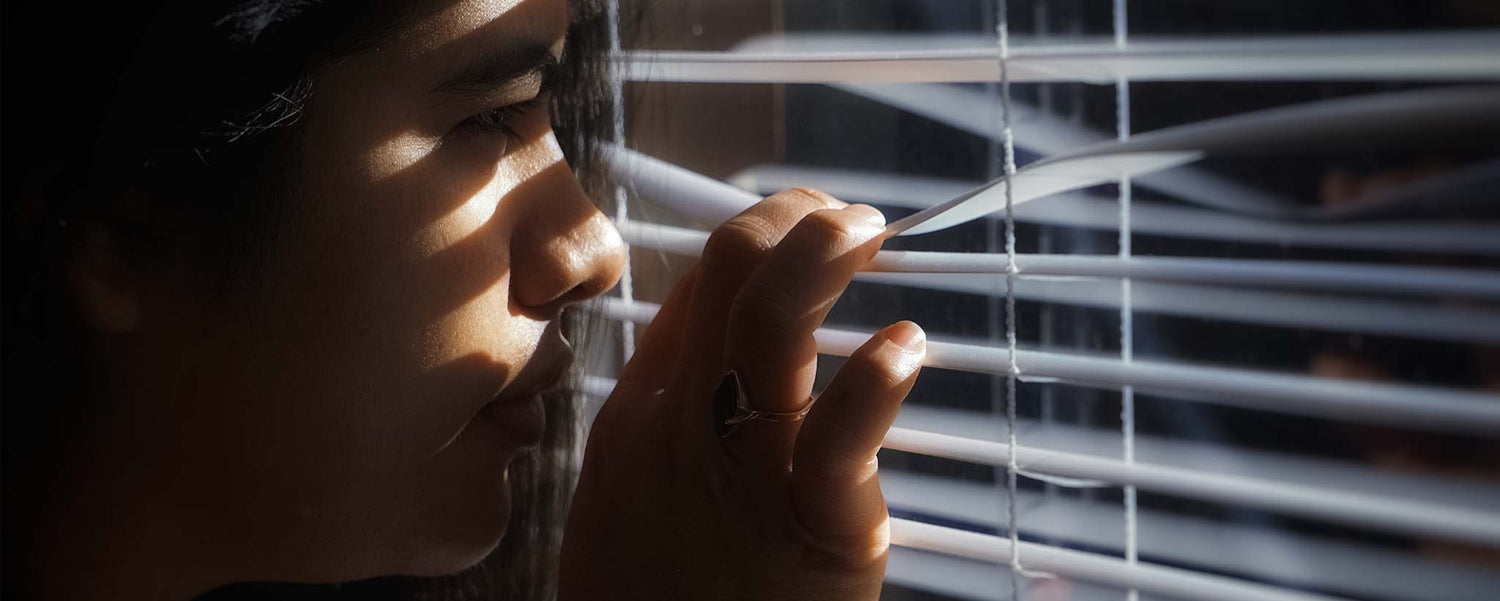
A harmless glance can become a harmful habit that escalates with legal and emotional risks.
A Casual Glance
Renee is a dutiful wife and mother. Her schedule, while the children are at school, allows her to do laundry and prepare meals, leaving her an hour of solitude before the chaos resumes.
On a sunny morning, she opens the window blinds for better illumination while portioning clothes. She tests her hand against the glass to gauge the temperature. Too cold to open.
She continues ironing and hanging garments when she glances through the window and sees something she shouldn’t. An unclothed man next door walks by his window.
Her eyes widen as conflicting thoughts race through her head. She’s happily married with a family. Yet the man’s build is appealing. Hopefully, he’ll be more cautious next time.

As she resumes her chores, she notices her attention drifting back toward the window—an emerging pattern she didn’t intend. Then she sees him return. Renee steps toward the blinds, intending to close them, but lingers while he gets dressed.
Later, when she retrieves mail from her curbside mailbox, he’s doing the same. They stand fifty feet from one another, wearing robes over their pajamas, smiling and waving.
Battling a Habit
She scolds herself while preparing dinner, replaying how she responded to what she saw. During her hour of solitude, she closes the blinds, but pauses near them out of expectancy.
The next day, her neighbor repeats the routine she’s only recently become aware of. Her new habit of peering begins consuming her personal quiet time—the hour she usually uses to reset her day. She finds herself freshening up before checking the mail, another sign that the behavior is influencing her routine.
In the evening, Renee stares at the ceiling while lying next to her husband.
“Should I tell him? Will he understand? Is there anything wrong with looking?” Her lips remain sealed.
When her family’s away the next day, she stands at her post, camera in hand. She tells herself it’s only for a closer view through the zoom, but her finger presses the button anyway.
Sitting at the kitchen table reviewing the photos, she blames her neighbor. “He’s leaving his window open on purpose—maybe for my benefit.”
It’s a cognitive distortion that reinforces her new pattern.
By the end of the week, Renee is glancing through the window every hour. Her children are wearing wrinkled clothes, and meals are late. It’s time to get help.
A Spousal Confession
Despite regressive peeks, Renee focuses on getting back to her routine. She serves a perfect dinner on time. When her husband is relaxing, she brings him herbal tea.
“Gus, baby, how was work?”
“Stressful as always. Everyone wants something yesterday, not tomorrow.”
“Do you think being a paralegal makes you more objective… or more judgmental?”
“Technically, all judging should be objective.”
“Good,” she swallows her tea. “If a wife were unintentionally unfaithful, should her husband forgive her?”
“Renee… what are you saying? Is this true?”
“No—at least I don’t think so. It depends on how you define it.”
“Either you did or didn’t do something wrong.”
“Well, I haven’t slept with anyone else… but I’ve developed the habit of looking a bit too long through a neighbor’s window.”
“What have you seen?”
“Too much.”
“You must have looked away… or closed the blinds. Right?”
“What if I didn’t?”
“That sounds like voyeurism. When someone is in their home, there’s a reasonable expectation of privacy.” [1]
“Even if someone leaves their blinds or curtains open?”
“Unless they’re standing outside naked or giving consent, watching through windows—or photographing—is a federal crime. State laws vary from misdemeanor to fines or imprisonment.” [2]
“Then I may have broken the law. Are you going to turn me in… or leave me?”
“How long has this been going on?”
“A little more than a week. That’s all.”
Gus exhales slowly. “Is that why meals have been late, and the laundry is piling up?”
“It has interrupted my routine.”
“You need to stop—seriously—like, right now.”
“I know. That’s why I’m telling you—for help. You said you’re objective.”
“I’m trying to understand whether this is curiosity, stress, or something that’s becoming compulsive. Am I not satisfying you?”
“Of course, I still love you. He’s next door. I don’t even know his name.”

“If he’s enticing people on purpose, he could be the one acting improperly. Either way, here’s what we’re going to do. You’re going to focus on your prior routine—without breaking the law. When I come home, I’ll ask how you did. Be honest.”
“I’ll try hard. What happens if I slip—a glance?”
“Then I’ll talk to him about covering his window—or you might need therapy.” [3]
“Okay. I think I can do it without escalating. Thanks for your understanding. Your meals will be on time.”
Continued viewing perpetuates the behavior to the point where it transcends what is considered culturally acceptable. It then becomes pathological, requiring psychotherapy using cognitive behavioral therapy. [3,4]
The warnings give Renee the incentive she needs to prevent this habit from becoming ingrained. She deletes the images and moves her ironing board to another window.


 Romance & Health Intertwine. Fall in love with a captivating romance miniseries that explores the essence of well-being. Become a ClinicalNovellas member for heartwarming tales.


Enjoy more articles about mental health here, or explore ClinicalInsights or ClinicalNovellas. This character-driven ClinicalReads article pairs practical insight with the narrative style found in ClinicalNovellas membership fiction.
ClinicalPosters offers human anatomy charts, scientific posters, and other services that compliment articles about mental health. Slide extra posters into DeuPair Frames without removing from the wall. This character-driven ClinicalReads article pairs practical insight with the narrative style found in ClinicalNovellas membership fiction.
Show your support by leaving an encouraging comment to keep the research going. This character-driven ClinicalReads article pairs practical insight with the narrative style found in ClinicalNovellas membership fiction.
Support the writing of useful articles about mental health by exploring human anatomy charts, scientific posters, and other products online. You may sponsor specific articles. This character-driven ClinicalReads article pairs practical insight with the narrative style found in ClinicalNovellas membership fiction.
ClinicalPosters provides human anatomy charts, scientific posters, and other products that compliment useful articles about mental health. This character-driven ClinicalReads article pairs practical insight with the narrative style found in ClinicalNovellas membership fiction.
ClinicalPosters offers human anatomy charts, scientific posters, and other products online. This character-driven ClinicalReads article pairs practical insight with the narrative style found in ClinicalNovellas membership fiction.
You can sponsor useful articles about mental health or donate to further research. This character-driven ClinicalReads article pairs practical insight with the narrative style found in ClinicalNovellas membership fiction. Visible content is optimized for device size.
The situational settings convey plausible outcomes which may not reflect the experiences of actual individuals.
FAQ: Recognizing the risks of voyeuristic behavior
What is voyeurism from a psychological perspective?
Voyeurism typically involves gaining sexual or emotional gratification by secretly observing others who believe they are in private. It often begins as curiosity but can reflect deeper struggles with intimacy, boundaries, or impulse control. When the behavior becomes repetitive or intrusive, it may signal a developing disorder.
When does voyeuristic behavior cross legal or ethical lines?
Voyeurism becomes illegal when it violates a person’s reasonable expectation of privacy—such as watching or recording through windows, using hidden cameras, or viewing someone without consent. Even brief, impulsive observations can cross ethical lines when they disregard privacy or become part of a growing pattern.
Can voyeuristic urges be treated by a mental health professional?
Yes. If the behavior feels compulsive, causes guilt, disrupts daily routines, or risks legal consequences, therapy can help. Cognitive behavioral therapy (CBT) often focuses on identifying triggers, improving impulse control, and strengthening healthy coping strategies before the behavior escalates.
Does curiosity always lead to a disorder?
No. Occasional intrusive thoughts or accidental observations do not constitute voyeuristic disorder. The concern arises when someone repeatedly seeks opportunities to watch others, rationalizes or minimizes the behavior, or continues despite negative consequences.