Wounds heal from the upper layer of skin, downward. To form a scab, blood clots and dries. How and why do you keep it dry?
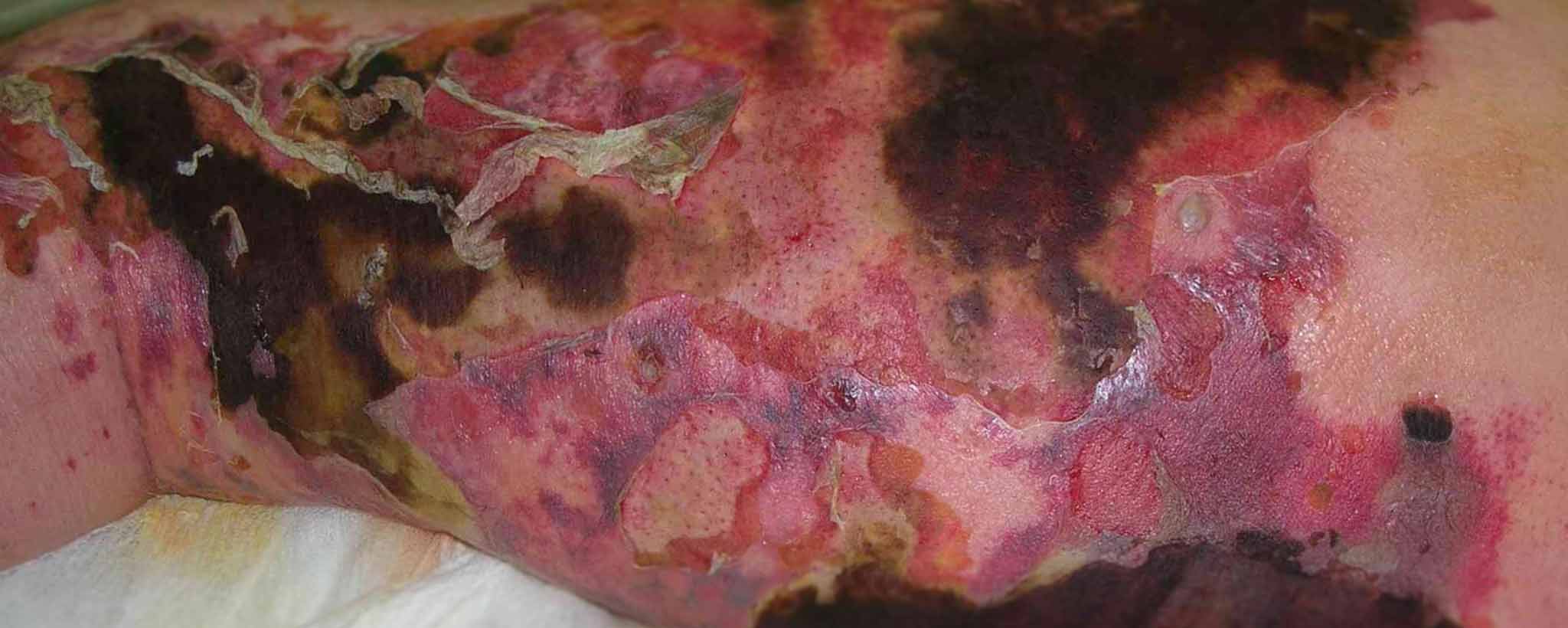
⚠️ Reader Discretion. Graphic images.
Wet Wounds
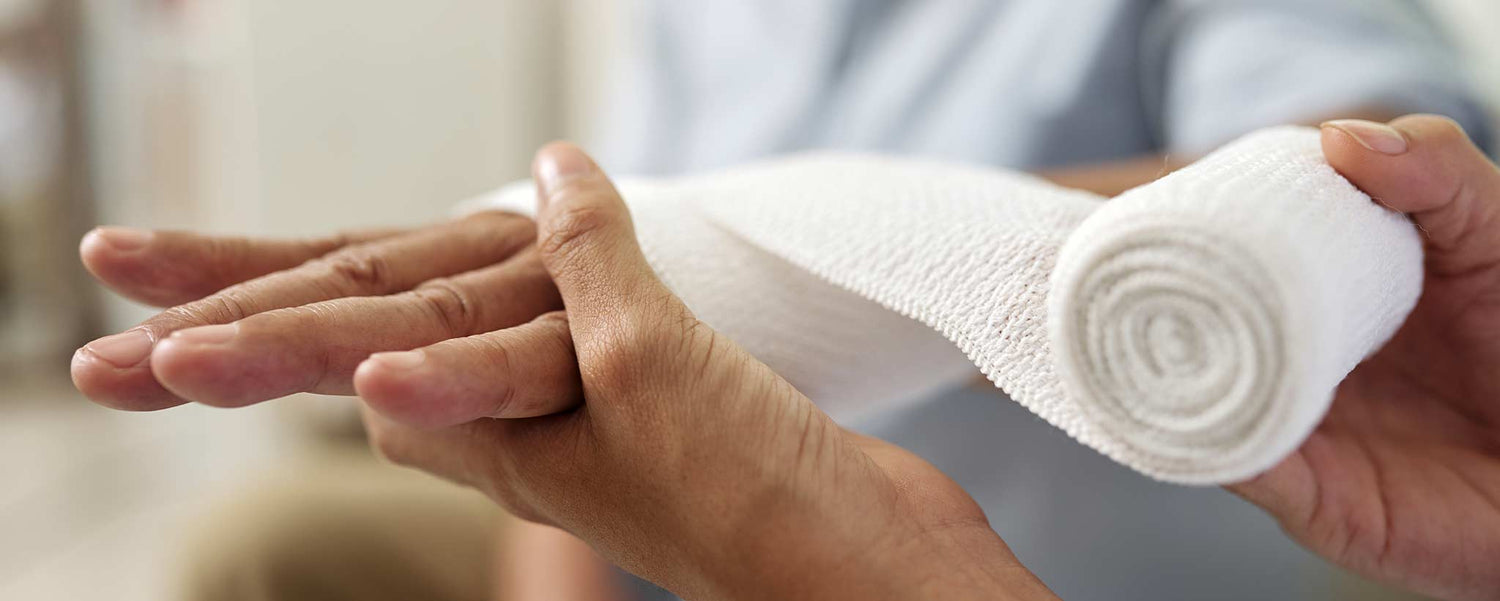
When you get a cut or have surgery, either you or a medical professional applies bandages. The general recommendation is to keep wound areas dry. Depending on the size and location, this can present a challenge. For example, a finger wound can get wet every time you wash your hands. Other areas can get waterlogged when you shower or bathe.
Depending upon the size of the dressing, it may be possible to temporarily wear a nitrile or latex glove over a finger bandage. This keeps it clean while cooking and running hands under water. You can cover your hand (or foot) with a plastic bag and tape it shut while showering. Otherwise, you may require sponge baths.
Wounds heal beneath a protective scab. As depicted on the Understanding Skin poster, to form a scab, blood clots and dries. Moisture prevents the scab formation. The longer as a gash remains open, the greater the risk of infection becomes. Deep wounds often require stitches—particularly if each time you change the dressing, blood flows out.
Urgent Care
During the pandemic, two places most people want to avoid are emergency rooms and urgent care facilities. Most of the patients are there for treatment of more serious conditions like respiratory viruses. Walking in with an open wound feels slightly worse than entering maskless with mouth open.

Deep wound normally requiring stitches treated with bandages and Neosporin.
I cut my finger on a spinning kitchen blender blade. The "V" shape gash was nearly 1/8 inch deep and 1/4 inch long. Blood kept soaking through bandages for two days. The wound could benefit from at least six stitches. Photos were sent to my primary care physician. In the meantime, I was taking every pain pill in my medicine cabinet. Bruising was evident the next day.

Cut finger without stitches bleeding through bandage.
A local pharmacist advised applying Neosporin. Then let it set for several seconds and wipe off excess. Apply a liquid skin sealer before covering it with a waterproof bandage. The wound remained dry longer. I let the surrounding skin air out with a brush-on liquid bandage when the area became pale from moisture. It healed without stitches after a few weeks. If warranted, visit an urgent care facility. Otherwise, speak to your local pharmacist for options.

Finger wound healed without stitches after six weeks.
Enjoy more articles about dermatology here, or explore ClinicalInsights or ClinicalNovellas.
ClinicalPosters offers human anatomy charts, scientific posters, and other services that compliment articles about dermatology. Slide extra posters into DeuPair Frames without removing from the wall.
Show your support by leaving an encouraging comment to keep the research going.
Support the writing of useful articles about dermatology by exploring human anatomy charts, scientific posters, and other products online. You may sponsor specific articles.
ClinicalPosters provides human anatomy charts, scientific posters, and other products that compliment useful articles about dermatology.
ClinicalPosters offers human anatomy charts, scientific posters, and other products online.
You can sponsor useful articles about dermatology or donate to further research.