
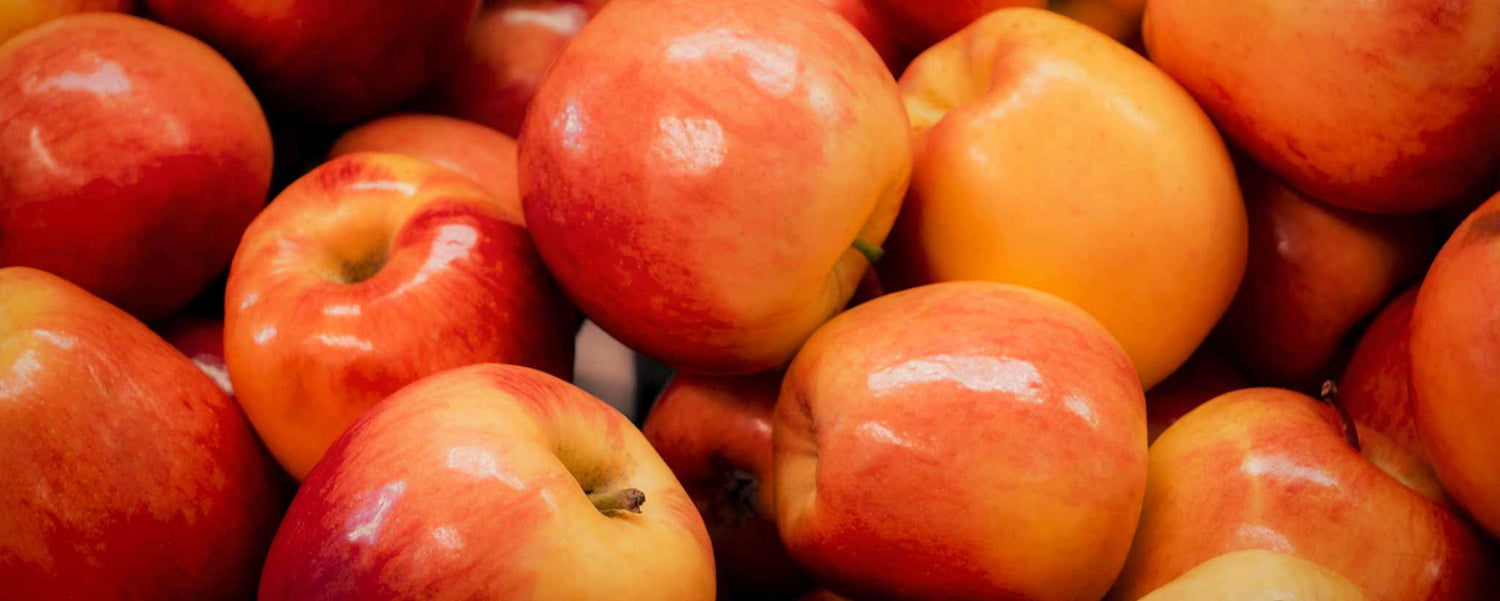

Researchers genetically fortify apples with essential vitamins and medication to eliminate common prescriptions.
The Hard Facts

DIABETES and high cholesterol commonly lead to heart disease. Insulin and statins require strict regimens that many patients find difficult to follow. What if they could clear their medicine cabinets and cure their ailments with fruit from their refrigerator? That’s the lofty goal of Dr. Collin Ferguson.
Five years each of scientific study, agricultural testing, and double-blind clinical studies have brought forth apple groves to cure humankind. Today, he has received final FDA approval to deliver Aplesk to the masses.
An innovative formulation seeks conditions that require time-released dosages. So there’s no ill-effect if eaten by someone without diabetes or high cholesterol. However, the premium cost is a natural deterrent against general consumption.
Pauline battles obesity and high cholesterol. Since it runs in her family, her doctor recommends statins. “That’s disappointing. Will I still be able to eat the fried foods I love?”
“I can’t recommend that, but the pill should mitigate some of the negative effects.”
When she leaves the office to pick up her prescription, a radio commercial announces Aplesk. She swerves to miss another vehicle while trying to increase the volume. Instead of going to the pharmacy, she drives home to research the innovation.
Across town, Randall is giving himself an insulin injection when he hears the Aplesk news. As the excitement reaches the internet, hundreds of thousands of people want to know if they can ditch their prescriptions. Dr. Ferguson arranges a press conference to suppress the phone calls and emails flooding his office.
“Ladies and gentlemen, I am happy to see the enthusiasm over Aplesk. We have groves strategically located across the country, with shipments heading to your local supermarkets as we speak.
“If you are not already taking statins or insulin, You may try the fruit daily for three months before getting your levels checked by your doctor. Medical professionals can access our detailed reports and transition recommendations for patients receiving medication.
”As children, we learned that an apple a day keeps the doctor away. We look forward to more people enjoying good health with an Aplesk a day in the months ahead.”
An acknowledged reporter asks, “Could consumers be biting the proverbial forbidden fruit by trusting their medical health to an apple?”
“With a distinctive orange hue, it’s no ordinary apple. Our clinical studies followed the effects on thousands of subjects over five years without adverse reactions. To eliminate redundancy, I’ll hold the remaining questions, allowing everyone to download the white paper from our website. Thank you for coming.”
The Crisp Bite
Grocery stores have a difficult time keeping up with demand as people at risk preemptively eat Aplesk along with patients. To offset their losses, pharmaceutical companies invest in the lucrative revenue stream of Aplesk.
Pauline is happy to learn of Aplesk in time to avoid statins. At first, she follows her doctor’s orders to limit fried foods. Then bad habits creep in. After several months, she expects a rebuke, but her bloodwork remains in the normal range. Now, instead of limiting herself to a couple of chicken drumsticks, she enjoys fries with three large pieces of chicken.
Randal weans himself from insulin. Follow-up tests show significant improvement with Aplesk. He checks his glucose levels at home every week, with pleasing results. Reports like these encourage Dr. Ferguson to begin planting proprietary apple groves internationally.
The Rotten Fruit
A lab report of scientifically modeled data from a colleague named Dr. Kim Lorraine comes across Dr. Ferguson’s desk, suggesting an exponentially adverse reaction. Since none of the consumers are complaining, he files the report as anomalous.
Year-over-year profits increase by orders of magnitude—until the fifth year. Now, the original test subjects begin exhibiting health regressions. Their bodies are overproducing the pharmaceutical element within the apples. This requires hospitalization. This unforeseen ten-year effect catches Dr. Ferguson off guard.
He assembles his team of brilliant minds for solutions. “I’m not interested in blamestorming right now. What matters is finding a solution that works, fast. Ideas?”
Dr. Lorraine suggests, “Maybe we could create a complementary fruit, like an orange, to balance the dosage.”
“We don’t have ten years to grow orchards, Kim,” Dr. Ferguson responds dismissively.
The tension from ignoring her earlier report is driving a conflict for which others in the room lack context.
Dr. Lorraine digs into the suggestion of not having enough time. “If only there were some way to have foreknowledge of this, resulting in overflowing orchards today.”
With a firm glare signaling the need for her to avoid testing him in front of everyone, Dr. Ferguson redirects the conversation. “Let’s hear from some of you others.”
Dr. George Maxwell advises, “An injectable antidote is the quickest solution.”
“No injections,” Dr. Ferguson reacts. “The whole point was to move people away from needles. What’s the alternative?”
“A serum. A fruit-flavored one,” back on track, Dr. Lorraine says. “At least it fits the brand.”
To save his reputation, Dr. Ferguson responds, “Good. Let’s go with that. We’ll position it to the FDA as a necessary public health response. Focus on fixing this without pointing fingers.”
Everyone raises their hands in agreement and gets to work. It’s not an overnight solution. During development, some patient deaths cause bad publicity.
A Bitter Pill
Pauline sits at her kitchen table, staring at her untouched plate of fried chicken she used to enjoy. It now seems toxic, based on what she’s heard on the news. “Five years left—maybe more, maybe less. The doctor said my cholesterol levels were fine.”
But the reports on her laptop about the original test subjects haunt her. “Overproduction of pharmaceutical compounds in the bloodstream,” one article reads. She shoves her plate away in anguish.
Randall asks his physician to transition him back to insulin injections. However, with so many uncertainties, his doctor recommends waiting for the clinical data and more instructions.
Randall returns home, sitting in his living room, the glucose meter on the coffee table in front of him. His numbers are fine, just as they’ve been for months. But no matter how many times he pricks his finger, he can’t shake the fear. He reads reports of original test subjects in the hospital. Their bodies suddenly rejecting the very thing that everyone gullibly swallowed.
He checks his levels again, even though he’d done it only an hour ago. “Still fine. But for how long?” he wonders.
The Greener Pastures
The lab scientists are working overtime without success. While looking at research data at his desk, Dr. Ferguson shoves everything to the floor.
He then shouts, “If we don’t fix this, it’s all over!”
He reaches out to his pharmaceutical investors to assist with a remedy. The combined resources of their labs come up with a viable candidate within six months. The public outrage over the Aplesk disaster makes the FDA wary of rushing another approval. Dr. Ferguson receives instructions to thoroughly test for six more months while simultaneously ramping up production capability.
The response is disheartening. Dr. Ferguson hangs up the phone, muttering, “Six more months. Six more months of people waiting, worrying, dying….”
The provisional regulatory approval comes on time as the antidote reaches doctors nationwide. This staves off more deaths but leaves a bitter taste in the mouths of consumers. Sales of Aplesk decline; investors pull out, and doctors return to their original solutions for diabetes and high cholesterol.
As the government ushers employees out and padlocks the doors to what was becoming a global empire, Dr. Ferguson sheds a tear. His bright future is now dim. His credibility has withered like the genetically modified apples rotting on the vines.
“All this time, I thought I was saving lives. Now, with the loss of my license, I can’t even recommend an apple a day to anyone.”
The End
Scope: These terms apply across the platform, not per-story. Viewing and evaluation are allowed. Redistribution, adaptation, or production requires express agreement. Use of this material for generative training or republication in any format without authorization is prohibited. Any relation to actual persons or events is coincidental. About 1300 total words.
Return twice weekly for new episodes. Login provides the most immersive experience.


